
Iris Recognition Technology
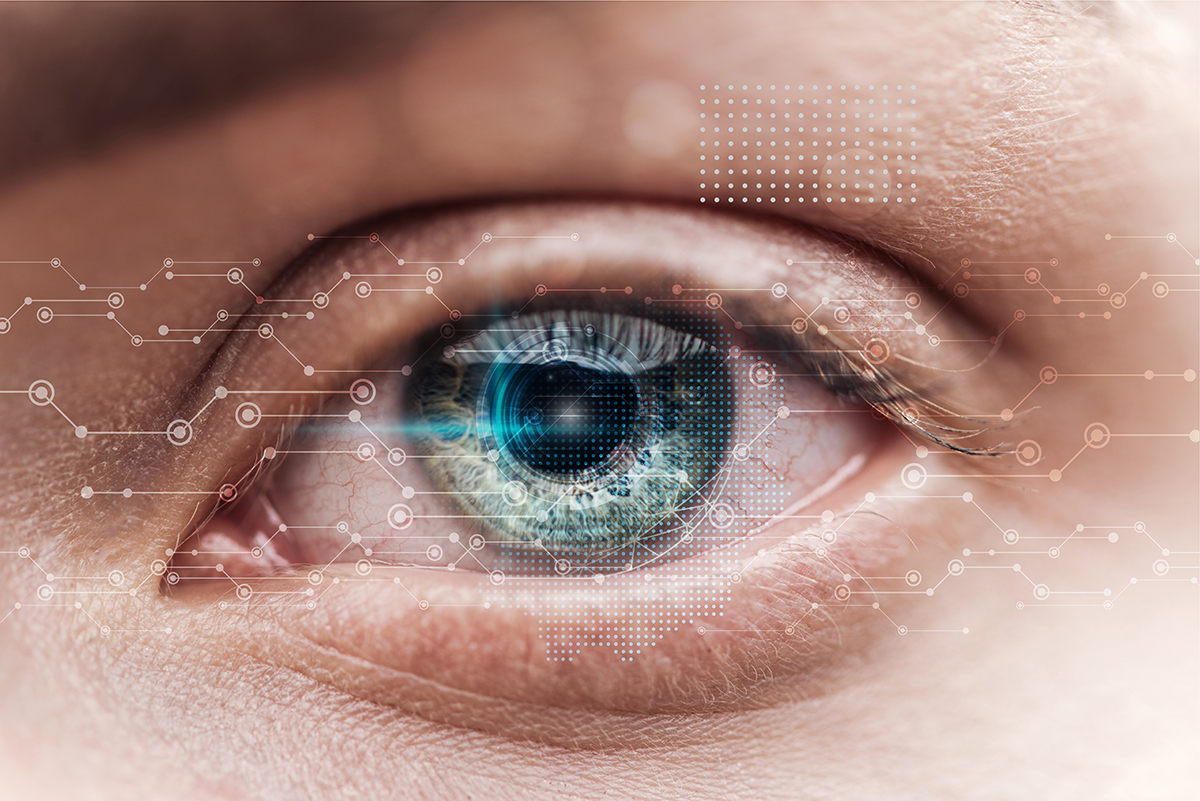
Iris recognition is the best of breed authentication process available today. While many mistake it for retinal scanning, iris recognition simply involves taking a picture of the iris; this picture is used solely for authentication. But what makes iris recognition the authentication system of choice?
- Stable – the unique pattern in the human iris is formed by 10 months of age, and remains unchanged throughout one’s lifetime
- Unique – the probability of two rises producing the same code is nearly impossible
- Flexible – iris recognition technology easily integrates into existing security systems or operates as a standalone
- Reliable – a distinctive iris pattern is not susceptible to theft, loss or compromise
- Non-Invasive – unlike retinal screening, iris recognition is non-contact and quick, offering unmatched accuracy when compared to any other security alternative, from distances as far as 3″ to 10″
Traditional Notions of Establishing Identity
Historically, identity or authentication conventions were based on things one possessed (a key, a passport, or identity credential), or something one knew (a password, the answer to a question, or a PIN.) This possession or knowledge was generally all that was required to confirm identity or confer privileges. However, these conventions could be compromised – as possession of a token or the requisite knowledge by the wrong individual could, and still does, lead to security breaches.
The Emergence of Biometrics
To bind identity more closely to an individual and appropriate authorization, a new identity convention is becoming more prevalent. Based not on what a person has or knows, but instead on what physical characteristics or personal behavior traits they exhibit, these are known as biometrics – measurements of behavioral or physical attributes – how an individual smells, walks, signs their name, or even types on a keyboard, their voice, fingers, facial structure, vein patterns or patterns in the iris.
Biometric Appeal of Iris Recognition
Of all the biometric technologies used for human authentication today, it is generally conceded that iris recognition is the most accurate. Coupling this high confidence authentication with factors like outlier group size, speed, usage/human factors, platform versatility and flexibility for use in identification or verification modes – as well as addressing issues like database size/management and privacy concerns – iris recognition has also shown itself to be exceedingly versatile and suited for large population applications.
Other System Components
IrisAccess system incorporates other system-designed elements. A low profile Identity Controller (ICU) offers easy greater integration convenience while ensuring that biometric templates are kept safe, protected and secure, off the imager.
The Biology Behind the Technology
Like a snowflake, the iris – the externally visible colored ring around the pupil – of every human eye is absolutely unique, exhibiting a distinctive pattern that forms randomly in utero in a process called chaotic morphogenesis. In fact, it’s estimated the chance of two iris (irides) being identical is 1 in 1078.

The Advantage of Iris Recognition
Iris recognition is an attractive technology for identity authentication for several reasons.
- The smallest outlier population of all biometrics. Few people can’t use the technology., as most individuals have at least one eye. In a few instances even blind persons have used iris recognition successfully, as the technology is iris pattern-dependent, not sight dependent.
- Iris pattern and structure exhibit long-term stability. Structural formation in the human iris is fixed from about one year in age and remains constant (barring trauma, certain rare diseases, or possible change from special some ophthalmologic surgical procedures) over time. So, once a individual is enrolled, re-enrollment requirements are infrequent. With other biometric technologies, changes in voice timbre, weight, hairstyle, finger or hand size, cuts or even the effect of manual labor can trigger the need for re-enrollment.
- Ideal for Handling Large Databases. Iris recognition is the only biometric authentication technology designed to work in the 1-n or exhaustive search mode. This makes it ideal for handling applications requiring management of large user groups, such as a National Documentation application might require.. Large databases are accommodated without degradation in authentication accuracy. IrisAccess platforms integrate well with large database back ends like Microsoft SQL and Oracle 9i.
- Unmatched Search Speed in the one to many search mode is unmatched by any other technology, and is limited not by database size, but by hardware selected for server management. In a UK Government-commissioned study, Iris ID’s IrisAccess platform searched records nearly 20 times faster than the next fastest technology. Iris ID has developed a high speed matching engine, IrisAccelerator™, designed to deliver 10 million+ matches per second.
- Versatile for the One to Many, One to One, Wiegand and Token Environments. While initially designed to work in one-to-many search mode, iris recognition works well in 1-1 matching, or verification mode, making the technology ideal for use in multifactor authentication environments where PINs, or tokens like prox or smartcards are used. In a token environment, many privacy issues related to biometric database management are moot, as the user retains control of biometric data – a small template of 512 bytes per iris.
- Safety and Security Measures In Place. Iris recognition involves nothing more than taking a digital picture of the iris pattern (from video), and recreating an encrypted digital template of that pattern. 512-byte iris templates are encrypted and cannot be re-engineered or reconstituted to produce any sort of visual image. Iris recognition therefore affords high level defense against identity theft, a rapidly growing crime. The imaging process involves no lasers or bright lights and authentication is essentially non-contact.
- Convenient, Intuitive User Interface. Using the technology is an almost intuitive experience, requiring relatively little cooperation from subjects. Proximity sensors activate the equipment, which incorporates mirror-assisted alignment functionality. Audio auto-positioning prompts, automated image capture, and visual and audio authentication decision-cueing completes the process.
How It Works
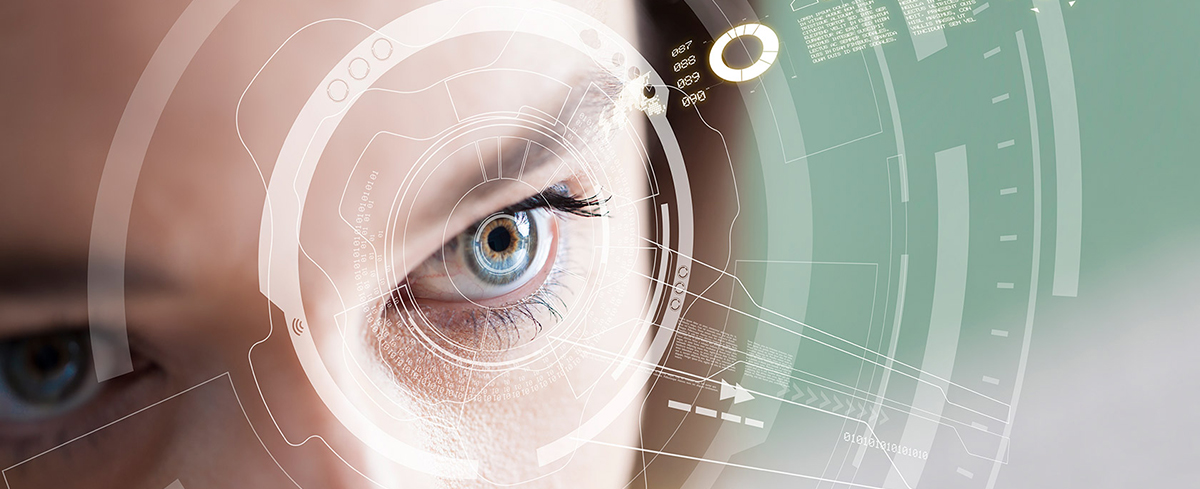
The IrisAccess employs iris recognition technology to provide accurate identity authentication without PIN numbers, passwords or cards. Enrollment takes less than 2 minutes. Authentication takes less than 2 seconds.
Video-based technology makes it easy to enroll, producing a template that in most cases is good for the life of the subject.
Although the terminology “iris-scanning” is often used when referring to iris recognition technology, there is no scanning involved at all. Iris technology is based on pattern recognition and the pattern-capturing methodology is based on video camera technology similar to that found in camcorders commonplace in consumer electronics. Like these cameras, the image capture process does not require bright illumination or close-up imaging.
- With a device activated by proximity sensor, a subject positioned 3″ to 14″ from the Enrollment Optional Unit is guided by a mirrored, audio-assisted interactive interface to allow an auto-focus camera to take a digital video of the iris.
- Individual images from the live video are captured using a frame grabber. The innovative algorithm of the iris recognition process analyzes the patterns in the iris that are visible between the pupil and sclera (white of the eye) and converts them into a 512-byte digital template. This value is stored in a database and communicated to Identification Control Units associated with portals where the subject has access privileges.
Recognition takes just 2 seconds
- Upon approaching a portal protected by IrisAccess, proximity sensors activate the iCAM (Iris Camera) when the subject nears the operational range of the unit. The same mirror-assisted, audio-prompted interface that the subject became familiar with at enrollment helps ensure proper positioning and speedy recognition. The iCAM uses the same video and frame-grabbing methodology to create, select and digitize an image to be compared against the stored value retained at enrollment.
- The live presented value is compared against stored values at the well-secured Identification Control Unit (ICU) assigned to the portal. Once the iris is matched, either a direct signal is sent to activate a door, or a Weigand signal sent to a central access panel provides the impetus to open the door to an individual authorized to enter.
How It Compares
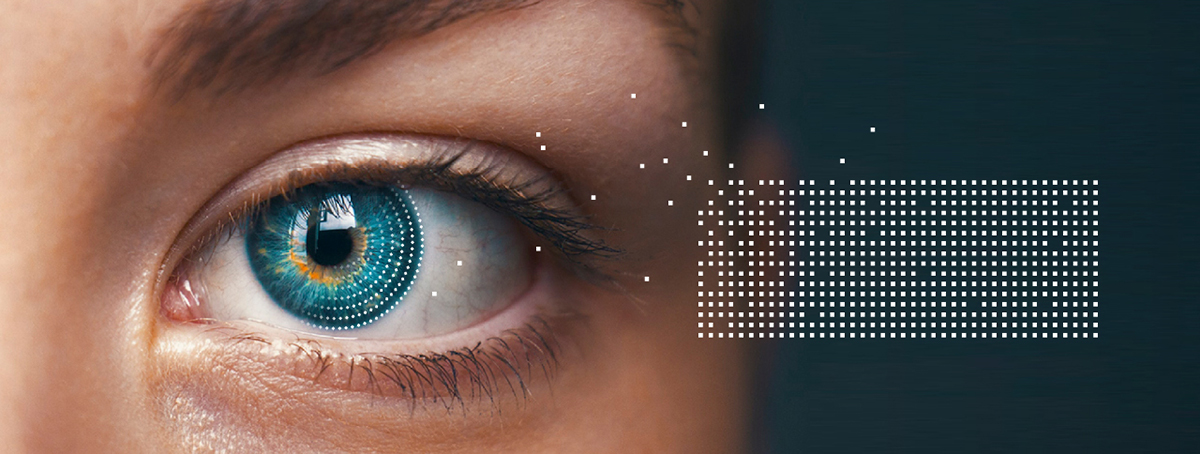
Few would argue with the generally held view – and evidence – that iris recognition is the most accurate of the commonly used biometric technologies. There are a number of other factors that weigh heavily in iris recognition’s favor for applications requiring large databases and real-time authentication.
Accurate
- Like a snowflake, every iris is absolutely unique. A subject’s left and right iris is as different from each other as they are from any other individual’s. It has been calculated that the chance of finding two randomly formed identical irises is on an almost astronomical order of 1 in 1078.
- Another differentiator impacting accuracy is that no human intervention is required to “set” thresholds for False Accept and False Reject performance. Instead, the human element plays no role in performance standards for this technology, while an unmatched FAR (false accept rate) performance of 1 in 1.2 million is delivered. Other electronic authentication technologies sometimes select a number of templates that represent “possible matches” – perpetuating the potential for error, in that final determination of identity relies on a human interpretation.
- At the root of iris recognition’s accuracy is the data-richness of the iris itself. The IrisAccess system captures over 240 degrees of freedom or unique characteristics in formulating its algorithmic template. Fingerprints, facial recognition and hand geometry have far less detailed input in template construction. In fact, it’s probably fair to say that one iris template contains more data than is collected in creating templates for a finger, a face and a hand combined. This is one reason why iris recognition can authenticate with confidence even when significantly less than the whole eye is visible.
Stability
- Virtually every other biometric template changes significantly over time, detracting from overall system performance and requiring frequent reenrollment. Voices change. Hands and fingers grow. The type of labor one does, even weather temperature or one’s medical condition can result in template changes in other technologies. Barring trauma and certain ophthalmologic surgery, the patterns in the iris are constant from age 1 to death. (At death, iris tissue is among the most rapidly deteriorating of all body tissues, something that leads to its use by forensic pathologists in estimating time of death.)
Fast
- No other biometric technology is designed to deliver 1-n searching of large databases in real time. A 2001 study conducted by the UK’s National Physical Laboratory found iris technology was capable of nearly 20 times more matches per minute than its closest competitor. Looking at speed in conjunction with accuracy, there’s simply no other technology that can deliver high accuracy authentication in anything close to the real-time performance of iris recognition.
- Conversely, fingerprint searches are challenged by database size, adding time to searches or necessitating filtering as a search acceleration technique. Even so, fingerprint technology often returns multiple “possible matches,” forcing introduction of human decision factors and increasing the potential for error in an authentication decision.
Scalable
- Iris Recognition and the IrisAccess system are ideal for large-scale ID applications or enterprise physical security and applications characterized by large databases. As iris data templates require only 512-bytes of storage per iris, very large databases can be managed and speedily searched without degradation of performance accuracy.
Non-Invasive
- No bright lights or lasers are used in the imaging and iris authentication process. The user can stand as far as 10″ away from the unit, and even wear glasses or contact lenses without compromising system accuracy. Unlike some other popular biometrics, iris authentication involves no physical contact. Not only does this mean “no touch” authentication, it also means the technology is ideally suited for use in environments where rubber gloves or other protective gear is used.
- Iris recognition applications are generally opt-in – there is none of the surveillance stigma sometimes affiliated with facial recognition, which scans crowds looking for individuals. Nor is there any tie-in to the large fingerprint databases maintained by law enforcement agencies, which often gives a negative stigma to fingerprint-based systems.